You’ve invested thousands in booth space, travel, and staff. Yet attendees walk right past without a second glance. This frustrating reality plagues most exhibitors because they rely on outdated display tactics. Fortunately, the solution isn’t complicated. It just requires a strategic shift in approach. This guide delivers proven trade show display ideas that command attention and drive meaningful engagement.
TL;DR
Your most effective trade show display ideas combine bold visuals, interactive elements, and strategic layout design. Rather than creating passive presentations, focus on building experiences that invite participation. Use lighting to draw eyes across the floor, then incorporate technology to keep your visitors engaged. Design your space for natural traffic flow and conversation. Ultimately, your best displays will leave attendees with a memorable experience.
Key Highlights
- Height matters: Elevated signage and hanging structures increase visibility from across the show floor
- Lighting drives attention: Strategic illumination makes booths 40% more noticeable than competitors
- Interactive beats passive: Touchscreens and demos increase dwell time by an average of 3-5 minutes
- Experiences create memories: Sensory engagement generates stronger brand recall than static displays
- Layout influences behavior: Open floor plans encourage entry while defined zones guide conversations
- Technology attracts crowds: AR, VR, and gamification draw curious attendees naturally
- Simplicity wins: Clean designs with focused messaging outperform cluttered booths
Why Most Displays Fail to Attract Attention
Trade show floors overflow with visual noise. Hundreds of exhibitors compete for the same eyeballs simultaneously, creating an overwhelming environment for attendees. Within this chaos, your generic display becomes invisible. Worse still, attendees develop “booth blindness” within minutes of entering the hall.
The Visibility Problem on Crowded Show Floors
Most booths look identical from twenty feet away. Standard pop-up banners and tablecloth displays create a sea of sameness that attendees navigate on autopilot. As a result, your company becomes indistinguishable from dozens of others. Your display must break this pattern immediately to have any chance of success.
Breaking through requires you to understand how people navigate crowded spaces. Attendees follow visual cues and movement instinctively. They gravitate toward activity, light, and novelty without conscious thought. Once you understand these natural behaviors, your trade show display ideas can leverage them strategically.
What Makes Trade Show Display Ideas Work?
Successful displays share common psychological principles that drive human behavior. They create curiosity, invite participation, and deliver value in rapid succession. When you understand these principles, you’ll transform how you approach booth design entirely.
The Psychology Behind Booth Attraction
Human brains process visual information before anything else. Bright colors, movement, and contrast trigger automatic attention responses that bypass conscious thought. This means your booth must win a split-second evaluation before attendees even realize they’re making a decision.
Beyond initial attraction, social proof influences behavior powerfully at trade shows. Crowds attract more crowds through simple observation. When attendees see others engaged at your booth, they naturally want to join the activity. For this reason, you should design your space to highlight visitor activity visibly from the aisle.
Finally, reciprocity drives engagement deeper once attendees enter your space. When you offer something valuable first—whether information, entertainment, or refreshments—attendees feel compelled to reciprocate. This psychological trigger often manifests as a willingness to listen to your pitch or share contact information.
How Can You Create Eye-Catching Trade Show Displays?
Visual impact determines whether attendees approach your booth in the first place. Without stopping power, even your best products and pitches go unheard. Your strategic choices in graphics, lighting, and structure create the attraction you need.
Bold Visuals and Strategic Lighting
Your large-format graphics with high contrast grab attention from across aisles instantly. However, not all graphics perform equally. Use images showing people or products in action rather than static logos. Faces particularly draw human eyes naturally due to our hardwired social instincts.
While your graphics capture initial attention, lighting separates amateur booths from professional displays. Your spotlights highlight key products or messaging with precision. Backlit graphics create depth and dimension that flat prints cannot achieve. Meanwhile, colored lighting establishes mood and reinforces your brand identity throughout your space.
Consider implementing these lighting techniques based on your goals:
- Spotlighting: Direct beams on your featured products or demo areas create focal points
- Backlighting: Your illuminated graphics glow and pop against neighboring booths
- Accent lighting: Colored LEDs reinforce your brand colors and create atmosphere
- Motion lighting: Programmable sequences catch peripheral vision from across aisles
Interactive Elements That Stop Traffic
Static displays encourage passive observation at best. Your interactive elements, by contrast, demand active participation. This fundamental shift from viewing to doing transforms your attendee engagement completely.
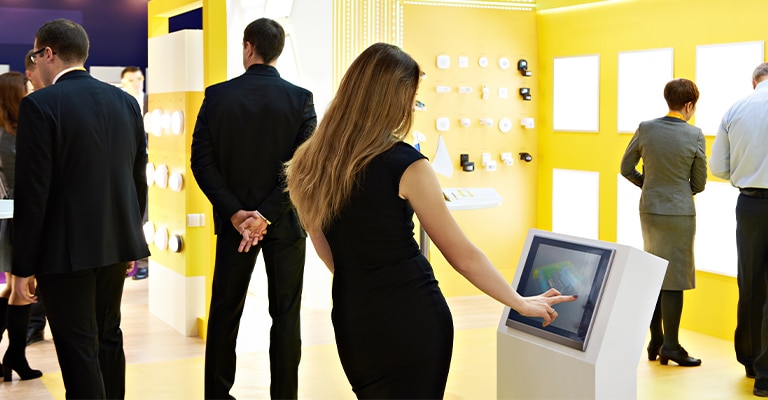
Touchscreen experiences exemplify this principle by letting visitors explore your offerings at their own pace. Your product configurators, virtual catalogs, and interactive presentations all increase time spent in your booth. More importantly, self-directed exploration creates personal investment in what visitors discover.
Live demonstrations take your engagement further by creating natural gathering points. When attendees see a crowd watching something, they instinctively stop to investigate. This social proof effect compounds throughout the day, so schedule your demonstrations regularly to maintain momentum.
Games and contests add another layer by generating excitement while collecting leads simultaneously. Your leaderboards encourage competition and give attendees reasons for repeat visits. Similarly, prize drawings create urgency and provide conversation starters for your team.
Technology Integration for Modern Booths
Technology signals innovation and forward-thinking to attendees evaluating potential partners. Beyond perception, the right tech creates experiences impossible through your traditional displays alone.
Augmented reality demonstrates this by overlaying digital content onto your physical products seamlessly. Attendees can visualize your products in their own environments before purchasing. This technology particularly excels for your complex or customizable offerings where imagination alone falls short.
Virtual reality takes immersion even further by transporting visitors into complete brand experiences. Your factory tours, product simulations, and branded environments become possible anywhere in the world. Consequently, VR consistently draws crowds curious about the novel experience.
Digital displays and video walls offer more practical flexibility for your booth. They create dynamic, changeable content that static graphics cannot match. You can update your messaging throughout the show based on what resonates with attendees, and motion naturally attracts attention in peripheral vision.
Which Trade Show Display Ideas Fit Your Budget?
Budget constraints inevitably shape your available options. However, understanding cost-to-impact ratios helps you allocate your resources more effectively regardless of your total investment.
Comparison Table: Display Types by Investment Level
| Display Type | Investment | Crowd-Drawing Potential | Best For |
|---|---|---|---|
| Pop-up banners with lighting upgrades | $500 – $2,000 | Moderate | Small booths, first-time exhibitors |
| Custom modular displays | $5,000 – $15,000 | High | Growing companies, multiple shows |
| Interactive touchscreen kiosks | $3,000 – $10,000 | High | Tech companies, complex products |
| Full custom exhibits | $25,000 – $100,000 | Very High | Major brands, flagship shows |
| AR/VR experiences | $10,000 – $50,000 | Very High | Innovative brands, experiential focus |
| LED video walls | $15,000 – $75,000 | Very High | High-traffic booths, visual storytelling |
If you’re budget-conscious, you can still maximize impact through strategic choices. First, invest heavily in lighting regardless of your overall budget, it delivers outsized returns. Second, rent technology rather than purchasing for occasional use. Finally, focus your resources on one showstopping element rather than spreading investments thin across many mediocre components.
What Are the Most Effective Layout Strategies?
Your booth layout influences visitor behavior more than you might realize. Even stunning visuals fail when poor spatial design creates barriers to entry. Strategic layout guides attendees naturally through your space and toward meaningful conversations.
Traffic Flow and Engagement Zones
Open entrances welcome visitors without psychological barriers. Tables and obstacles along your booth perimeter signal “stay out” to passersby, even unintentionally. Instead, create clear sightlines into the activity happening inside your space to draw people in.
Once visitors enter, your distinct zones should guide different interaction types naturally. Quick engagement areas near edges capture casual browsers who aren’t ready for deep conversation. Deeper conversation spaces toward the back accommodate serious prospects who want detailed discussions. This progression mirrors how relationships develop naturally.
Apply these layout principles to optimize your space:
- The 10-foot rule: Your core message must be readable from ten feet away to capture attention
- Open corners: Remove barriers that block natural traffic flow into your booth
- Demo positioning: Place your demonstrations where crowds won’t block aisles or entrances
- Seating strategy: Use seating to encourage longer conversations, but position it away from your primary engagement areas
- Storage solutions: Hide your supplies and personal items to maintain clean aesthetics throughout
How Do Top Exhibitors Use Experiential Marketing?
Leading brands create immersive experiences that attendees remember long after the show ends. Rather than presenting information, these approaches transform passive visitors into active participants. When you create these emotional connections, you’ll drive business results far beyond what traditional displays achieve.
Sensory Experiences That Create Memories
Multi-sensory engagement creates stronger memory formation than visual stimulation alone. By incorporating elements beyond just displays, you tap into deeper psychological processes that cement brand recall.
Sound design establishes atmosphere and draws attention before visitors even see your booth. Music, audio effects, or branded soundscapes make your space distinctive from neighbors. Just remember to keep your volume appropriate for conversation once attendees arrive.
Scent creates surprisingly powerful emotional connections that bypass conscious thought. Subtle fragrance can reinforce your brand associations in memorable ways. Coffee aromas, for example, invite people to linger while creating positive associations with your brand.
Touch opportunities through product samples or interactive materials deepen your engagement physically. Whenever possible, let attendees hold, feel, and manipulate your products directly. This tactile connection builds confidence and emotional investment simultaneously.
Taste through food and beverage offerings attracts traffic naturally while creating goodwill. Your branded refreshments give weary attendees a reason to visit and stay. This hospitality approach has driven results for exhibitors across every industry.
Beyond individual senses, consider these experiential elements that consistently drive engagement:
- Photo opportunities: Your branded backdrops encourage social sharing and extend reach beyond the show floor
- Hands-on workshops: Your mini-classes position you as an expert while delivering genuine value
- Live entertainment: Performers attract crowds and create energy that spreads to neighboring aisles
- Relaxation zones: Your comfortable spaces enable meaningful conversations away from floor chaos
- Charging stations: These practical amenities attract grateful attendees who stay while their devices power up
What Common Display Mistakes Should You Avoid?
Even your most creative trade show display ideas will fail when basic errors undermine execution. Awareness of these common pitfalls helps you avoid sabotaging your own success.
- Cluttered messaging overwhelms attendees with competing information. Too many messages fight for attention, and none wins. Focus on one primary takeaway instead, saving your detailed information for conversations with interested prospects.
- Poor lighting choices repel visitors before they approach. Harsh overhead lighting or dim spaces feel unwelcoming and unprofessional. Invest in professional lighting design to create an inviting atmosphere in your booth.
- Blocking booth entrances creates psychological barriers that deter visitors. Tables across your booth front signal “appointment only” even when that’s not your intent. Open your space to welcome natural foot traffic.
- Ignoring sightlines buries your message behind physical obstacles. Your tall elements should live toward the back while short elements go at edges. Test your visibility from multiple angles before the show opens.
- Static staff positioning makes your team seem unapproachable. Team members standing rigidly in corners intimidate rather than welcome visitors. Train your staff to move, engage, and demonstrate actively throughout the day.
- Overlooking flooring misses an opportunity for comfort and branding. Padded flooring attracts weary attendees whose feet hurt after hours of walking. Your branded carpet reinforces your professional image while providing relief.
Frequently Asked Questions About Trade Show Display Ideas
- How much should you budget for an effective trade show display? Allocate 30-40% of your total show budget to display and design. A 10×10 booth typically requires $5,000-15,000 for impactful results.
- What trade show display ideas work best for small booths? Maximize vertical space with tall banners and hanging signs. Use bold, simple graphics and incorporate one standout interactive element.
- How far in advance should you plan your display? Begin planning 4-6 months before major shows. Custom displays require 8-12 weeks for production alone.
- Are rental displays worth considering? Yes, if you exhibit infrequently or want to test new concepts. Quality rentals cost 30-50% less than purchasing.
- What’s the most impactful single upgrade you can make? Professional lighting delivers the highest ROI. Proper lighting transforms average displays into eye-catching experiences.
- How do you measure which display elements perform best? Track booth traffic, dwell time, and lead quality across shows. Survey your staff about which elements sparked productive conversations.
- Should you change your display for different shows? Adapt your messaging and featured products for each audience. Your core structure can remain consistent while graphics evolve.
- What display trends are emerging? Sustainability-focused materials, LED technology, and hybrid digital-physical experiences are gaining momentum.
Final Thoughts: Your Next Move
You now have a comprehensive toolkit of trade show display ideas proven to draw crowds. However, your knowledge alone changes nothing. Your implementation creates results.
Start with one idea from this guide that resonates with your situation. Choose the concept that best fits your budget and upcoming show timeline. Then execute it excellently rather than attempting everything at once. Your competitors will keep deploying forgettable displays. They’ll wonder why certain booths attract all the traffic while theirs sits empty. You’ll know the answer—and you’ll be the one drawing the crowd.