Experiential Marketing: Creating Memorable Brand Connections
Think about the last time a brand genuinely impressed you. Maybe you demoed a new product, played with an interactive display, or stepped into a virtual reality demo. That feeling that pulsed through your veins originated from experiential marketing.
As a trade show exhibitor, you need a strong marketing plan rich with ways to stand out. There are so many booths at every show. Most look the same. They hand out brochures and show boring slides. Old-school marketing like this often fails today.
People want real interactions now. They want fun experiences they can remember, not another product brochure. They want to try them, touch them, and play with them. This is exactly where experiential marketing works best.
Experiential marketing turns normal brand meetings into exciting experiences. It touches your senses, stirs your feelings, and sticks in your mind. Unlike regular marketing, which talks to people, experiential marketing invites your audience to join and become part of the brand story.
In this guide, we’ll show you how to use experiential marketing. You’ll learn to boost your trade show results and get more people talking to your brand. You’ll also collect better leads. Most importantly, you’ll make more sales.
This post provides an overview of experiential marketing and a few simple ways to use these ideas at your next event. These ideas work for everyone, regardless of whether you have a small budget or a big one, a tiny booth, or a ton of space.
By the end of this guide, you’ll understand what experiential marketing is. You’ll know why it works so well. You’ll have a clear plan to try it yourself.
What is Experiential Marketing?
Think of the last time you walked through a trade show. Most booths had people handing out flyers or showing slides. But maybe one booth stood out. Perhaps they had a game to play, or let you test their product, or offered a unique photo spot that made you smile.
That booth was using experiential marketing. And you probably remember them better than all the others.
Experiential marketing gets your audience to interact with your brand in real life. Unlike old-school marketing that just sends one-way messages, experiential marketing creates two-way talks through hands-on experiences.
It’s the difference between telling someone you make the best coffee and letting them taste it for themselves. It’s showing, not just telling. And it works because we remember what we do far better than what we read or hear.
At trade shows, where every booth competes for attention, experiential marketing helps you stand out. While your competitors talk about features and hand out brochures, you can create moments that visitors will share with others and remember long after the event.
Definition and Core Concept
At its heart, experiential marketing builds connections between your brand and your audience. You’re not just showing your products – you’re creating experiences that let people see, touch, hear, smell, or taste what your brand stands for.
Think of it like this: telling someone about your product is one thing, but letting them try it is much better. When people experience your brand directly, they form emotional bonds that last much longer than seeing a simple ad or brochure.
How It Differs from Traditional Marketing
Traditional marketing mostly talks about features and benefits. Experiential marketing focuses on how your product makes customers feel. Here’s how they compare:
- Traditional marketing is often passive, with messages going one-way from brand to consumer
- Experiential marketing is active, getting people to interact and take part
- Traditional marketing usually targets the logical mind with facts and numbers
- Experiential marketing appeals to emotions and creates memorable sense-based experiences
For trade show exhibitors, this matters a lot. While others hand out brochures and free pens, you can create an experience that people will remember long after the show ends.
Core Elements of Successful Experiential Marketing

Not all experiential marketing is created equal. Some experiences wow the crowd and drive real results. Others fall flat, feeling forced or failing to connect with the audience.
What makes the difference? It’s not just about having the biggest budget or the flashiest technology. The most successful experiential marketing shares key elements that work together to create lasting impact.
Think of these elements as the ingredients in a recipe. You might adjust the amounts based on your brand and audience, but leaving one out entirely can ruin the dish. When all these ingredients come together in the right way, you create experiences that don’t just attract attention—they build real connections that lead to sales.
Let’s look at the four core elements that make experiential marketing work. When you understand these fundamentals, you can create effective experiences whether you have a small booth or a massive exhibition space, a modest budget or unlimited resources.
Sensory Engagement
The best experiential marketing engages many senses. When people can see, hear, touch, taste, or smell parts of your brand, their experience becomes more vivid and memorable.
For example, a software company might set up a hands-on demo where people can try their product. A food company might offer samples that engage both taste and smell. The more senses you engage, the stronger the impression you’ll make.
Emotional Connection
Good experiential marketing makes people feel something. It might be joy, surprise, or excitement. When people feel emotions, they remember brands better and longer.
Think about how you can make your trade show booth create good feelings. When visitors connect your brand with happy moments, they’re more likely to remember you. They’re also more likely to buy from you later.
This doesn’t mean you need to make people laugh or cry. Simple positive feelings work well too. Maybe your demo makes them feel smart. Or your activity makes them feel successful. Even small good feelings can make a big difference.
Brand Storytelling
Every brand has a story, and experiential marketing gives you the perfect way to tell yours. Rather than just stating your values, show them through hands-on experiences that bring your brand story to life.
Your trade show booth should tell your brand’s unique story through its design, activities, and talks. This storytelling helps people understand not just what you sell, but why you exist and how you can help them.
Authenticity
Today’s people can spot fake things easily. Real experiences that truly show your brand values will work better than flashy tricks that feel fake.
Make sure every part of your experiential marketing matches your brand. If your brand is about being green, show that in your booth activities. If you’re about high-tech solutions, use modern technology in your demos.
When your experiences match your brand message, people trust you more. Trust leads to better relationships and more sales.
Types of Experiential Marketing for Trade Shows
“So what exactly should we do in our booth?” This is often the first question trade show teams ask when planning their experiential marketing strategy. The good news is you have many options to choose from.
The best approach depends on your brand, your products, your audience, and your goals. A tech company might shine with a virtual reality demo, while a food brand might win hearts through taste testing. What works for one company might not work for another.
That’s why it helps to understand the main types of experiential marketing that work well at trade shows. Think of these as starting points that you can adapt to fit your specific needs. You might use just one type or combine several for a multi-layered experience.
The key is to choose approaches that highlight your brand’s strengths and appeal to your target audience. A high-end fashion brand might focus on creating Instagram-worthy photo opportunities, while an industrial equipment company might benefit more from hands-on product demos.
Let’s explore four effective types of experiential marketing that consistently deliver results at trade shows, regardless of industry. As you read, think about which ones might work best for your unique situation.
Interactive Product Demonstrations
Move beyond static displays by creating hands-on demos that let visitors try your products. When people actively use your product, they remember it better than just looking at it.
For example, a tech company might set up a station where people can test their software. A furniture maker might create seating areas where people can sit and talk with sales reps. Let people touch, use, and experience what you’re selling.
Immersive Virtual Reality Experiences
Virtual reality (VR) is exciting technology. It can take people to different places without leaving your booth. It can show big products that don’t fit in your space.
A construction company can use VR. People can drive big machines safely. No real machines needed. An architecture firm can give virtual tours. People can walk through buildings that are far away.
VR shows people that your company uses new technology. It makes your booth more exciting than others.
Gamification Elements
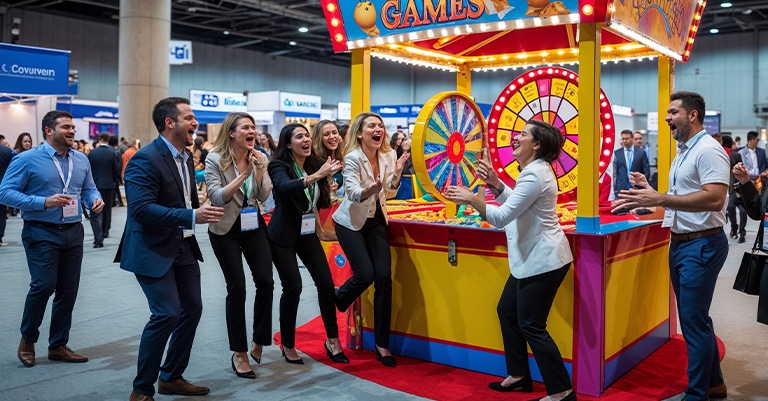
Games make your booth fun. People love to play and compete. Games turn quiet visitors into active players. They want to join in and try to win.
You can use touchscreen quizzes about your business. Make physical challenges that show what your product can do. Create digital treasure hunts that make people look at all your offerings.
Give prizes to winners. Use items with your company name on them. This gives you more chances to connect with people.
Pop-up Experiences and Brand Activations
Create something special in your booth space. Offer experiences that people don’t expect. These activities become the fun parts that everyone talks about.
A drink company can set up a mixing station. People can make their own custom beverages. A wellness company can offer short massages. They can also do quick meditation sessions.
These special activities help people remember your booth. They will talk about you long after the trade show ends.
Benefits of Experiential Marketing at Trade Shows

Trade shows cost a lot of money. You pay for booth space, travel, staff time, and materials. With all this spending, you need to see real results. This is where experiential marketing really helps.
When done right, experiential marketing gives you benefits that old-school trade show methods can’t match. While other exhibitors wonder why their business cards don’t turn into sales, companies using experiential marketing see much better results.
The benefits go way beyond just “having a cool booth.” Experiential marketing creates real improvements in areas that directly help your business. It solves common trade show problems like low booth traffic, poor leads, and weak sales after the show.
Best of all, these benefits work for companies of all sizes. You don’t need a huge budget to see great results. Even small, smart experiential ideas can greatly improve your trade show outcomes.
Let’s look at four major benefits that make experiential marketing worth the money. These advantages explain why more successful exhibitors are moving away from boring displays toward fun, interactive experiences.
Increased Booth Traffic and Engagement
Interactive experiences draw people to your booth. When people see others having fun at your booth, they want to join in too. This brings more visitors than boring displays.
People also stay longer at fun booths. They spend more time talking with your team. This gives you more chances to connect with them. More time means better conversations and stronger relationships.
Enhanced Brand Recall and Recognition
People remember experiences much better than ads or brochures. When visitors do something fun at your booth, they remember you longer. This creates stronger memories in their minds.
Studies show that experiential marketing can boost brand memory by up to 70%. This is much better than regular marketing methods. When people remember your brand clearly, you have a big advantage after the trade show ends.
Higher Quality Lead Generation
Not all leads are good leads. Experiential marketing helps you find better prospects. It attracts people who really connect with your brand and what you offer.
When people spend time at your interactive booth, you learn about their interests and needs. This helps you have better conversations. You can score leads more accurately. Better leads turn into customers more often.
Increased Social Media Exposure
Good experiential marketing makes people want to share photos. When visitors find something cool, surprising, or fun, they take pictures. They share these photos with their friends online.
Create “Instagram-worthy” moments at your booth. Make experiences that people want to photograph. Each social media post acts like a personal recommendation from the visitor to their followers. This spreads your brand message far beyond the trade show floor.
How to Implement Experiential Marketing at Your Next Trade Show

You’re convinced that experiential marketing can transform your trade show results. You understand the benefits and you’ve seen examples that inspire you. But now you’re facing the big question: “How do we actually make this happen?”
Moving from theory to practice can feel overwhelming. Where do you start? How do you turn ideas into real experiences? What if you’ve never done anything like this before?
The good news is that implementing experiential marketing doesn’t require a complete overhaul of your trade show strategy. You don’t need to throw out everything you’ve done before. Instead, you can build on your existing foundation by adding experiential elements that enhance your current approach.
Many successful exhibitors start small. They pick one experiential element to test at their next show and measure the results. Then they expand into multiple types of experiential marketing. This approach reduces risk while still allowing you to see real improvements.
The key is to follow a simple process. Experiential marketing implementation becomes much more manageable when you break it into specific steps. Each step builds on the previous one, creating a roadmap that takes you from planning to execution.
Here are four essential steps for implementing experiential marketing at your next trade show. These steps work whether you’re adding your first interactive element or completely redesigning your booth experience.
Define Clear Objectives and Target Audience
Start by setting your goals. Are you focusing on brand awareness, lead generation, product demos, or building relationships?
Identify exactly who you want to reach at the trade show. Understanding your target audience’s likes, pain points, and needs will help you design experiences that connect with them. The more tailored your experience, the more effective it will be.
Align Experiences with Brand Values
Every experiential element should reflect your core brand values. If your experience and your brand identity don’t match, it can confuse visitors and weaken your message.
For example, if your brand focuses on innovative technology, your experience should showcase innovation. If you value being green, make sure your experiential elements show environmental responsibility in both message and materials.
Design Interactive Elements for Your Booth
Brainstorm specific interactive elements that will bring your brand to life. Consider your space limits, budget, and whether your ideas are technically possible.
Some effective options include:
- Touch-screen demos that let people explore on their own
- Photo spots with branded backdrops
- Mini-workshops or learning stations about your products
- Technology-enabled interactions like augmented reality
- Physical activities that show product features or benefits
Train Staff for Experiential Engagement
Your team plays a key role in experiential marketing success. Your staff must understand the experience, why it matters, and how it connects to your brand story.
Train booth staff to:
- Invite visitors to participate without being pushy
- Explain what the interactive elements are for
- Help with experiences when needed
- Connect the experiential elements back to your products
- Collect contact information and qualifying details
Measuring Success: Experiential Marketing Metrics

Your experiential marketing booth was a hit. People loved the interactive demo. Crowds gathered around your virtual reality station. Your team collected hundreds of business cards. But when you get back to the office, your boss asks the tough question: “Was it worth the investment?”
This is where many exhibitors struggle. They know their experiential marketing felt successful, but proving it with hard numbers is another challenge entirely. Without clear metrics, it’s hard to justify the expense or improve for next time.
The truth is, experiential marketing can and should be measured. But it requires tracking different metrics than traditional trade show approaches. You need to look beyond simple booth visits and business card counts to understand the real impact of your experiential efforts.
The key is measuring both immediate results and long-term effects. Some benefits show up right away during the trade show. Others become clear weeks or months later when leads turn into customers. You need metrics that capture both types of success.
Good measurement also helps you improve. When you track the right metrics, you can see what worked, what didn’t, and what to change for your next show. This data-driven approach turns experiential marketing from a one-time experiment into a proven strategy.
Let’s explore three types of metrics that will help you prove the value of your experiential marketing and make it even better next time.
Quantitative Measurements
Track concrete numbers that show the reach and impact of your experiential efforts:
- Booth traffic – Count total visitors and compare to previous events
- Dwell time – Measure how long visitors stay at your experience
- Lead quantity – Track the number of contacts gathered
- Participation rate – Calculate the percentage of booth visitors who engaged with your experience
- Social media metrics – Monitor mentions, hashtag usage, and shares related to your booth
Qualitative Feedback
Numbers tell only part of the story. Collect qualitative feedback to understand the emotional impact:
- Visitor surveys – Ask participants about their experience and view of your brand
- Sales team insights – Gather observations from your booth staff about visitor reactions
- Follow-up talks – Note how often prospects mention your experience in later communications
Long-term Impact Assessment
Some benefits of experiential marketing appear over time:
- Sales conversion rates – Track how experiential marketing leads convert compared to other sources
- Customer lifetime value – Monitor whether customers acquired through experiential efforts show more loyalty
- Brand perception shifts – Measure changes in how your brand is viewed before and after major experiential campaigns
Common Mistakes to Avoid in Experiential Marketing
You’ve done your homework. You understand experiential marketing and how it can benefit your trade show results. You’re ready to implement it at your next event. But before you dive in, let’s talk about what can go wrong.
Even companies with good intentions and solid budgets can stumble when implementing experiential marketing. They might create experiences that look impressive but fail to connect with their audience. Or they might design activities that attract crowds but don’t generate quality leads.
The good news is that most experiential marketing failures follow predictable patterns. By learning from others’ mistakes, you can avoid the most common pitfalls and dramatically increase your chances of success.
These mistakes aren’t always obvious. Sometimes an experience seems successful on the surface but fails to deliver real business results. Other times, small oversights can undermine an otherwise brilliant concept.
The key is understanding these common mistakes before they happen. When you know what to watch out for, you can design better experiences and avoid wasting time and money on approaches that don’t work.
Let’s examine four major mistakes that trip up many first-time experiential marketers. By avoiding these pitfalls, you’ll be well on your way to creating experiences that truly drive results.
Prioritizing Flash Over Substance
Flashy experiences might get attention at first. But they fail if they don’t match your brand. Always make sure your activities show what your company really offers.
For example, a cool VR experience that has nothing to do with your products will confuse people. It won’t help you make sales. Every activity should have a clear purpose. It should support your main business goals.
Neglecting the Follow-up Process
The experience doesn’t end when people leave your booth. Many companies create great booth experiences but then fail to follow up well.
Plan your after-show emails carefully. Mention the fun activities that visitors did at your booth. This helps them remember you. It also helps them recall your brand among all the others they saw at the show.
Overcomplicating the Experience
Sometimes simple is better. If your activity needs long explanations or hard instructions, people may walk away. They won’t want to participate.
Design experiences that are easy to understand. Make the next steps clear and obvious. Remember that trade show visitors don’t have much time. They have short attention spans. Make it easy and fun to join in.
Failing to Train Staff Properly
Your team’s ability to help with experiences greatly affects their success. Staff who aren’t prepared can ruin even the best booth activities.
Spend time training your team before the event. Make sure everyone knows how the activities work. But also make sure they understand why these activities matter. They should know how the experiences connect to your sales and marketing goals.
Conclusion
You now have what you need to change your trade show booth with experiential marketing. You know what it is, why it works, and how to do it right. Furthermore, you also know the mistakes to avoid.
But knowing isn’t enough. You need to take action. The best companies start small. They don’t wait for a perfect plan or big budget. They begin with what they have right now.
Experiential marketing helps you stand out at crowded trade shows. Fun, memorable activities build emotional connections that regular marketing can’t match. These connections lead to better leads, stronger relationships, and more sales.
Your next trade show is your chance to try these ideas. Pick one part of your current booth that could be more interactive. Maybe add a simple demo people can try. Or create a cool photo spot for social media.
Test your idea at the next show. Watch how people react. Track your results with the metrics we talked about. Then use what you learn to make it better next time.
Over time, you’ll build a booth that people actively look for and remember. While your competitors use boring displays and standard sales talks, you’ll be the company everyone remembers.
The future of trade shows isn’t just about showing products. It’s about creating experiences that show what makes your brand special. You have the tools and knowledge now. Are you ready to make your next trade show unforgettable?